These case studies are representative planning scenarios for foreign SME owners considering a business in Thailand. They are not client testimonials or promises of outcome. They are designed to help business owners understand how common situations, such as opening a business with a Thai spouse, relocating as a consultant, or operating a restaurant with a Thai partner, can raise connected questions about ownership, control, documentation, compliance, and work permit planning.
Image
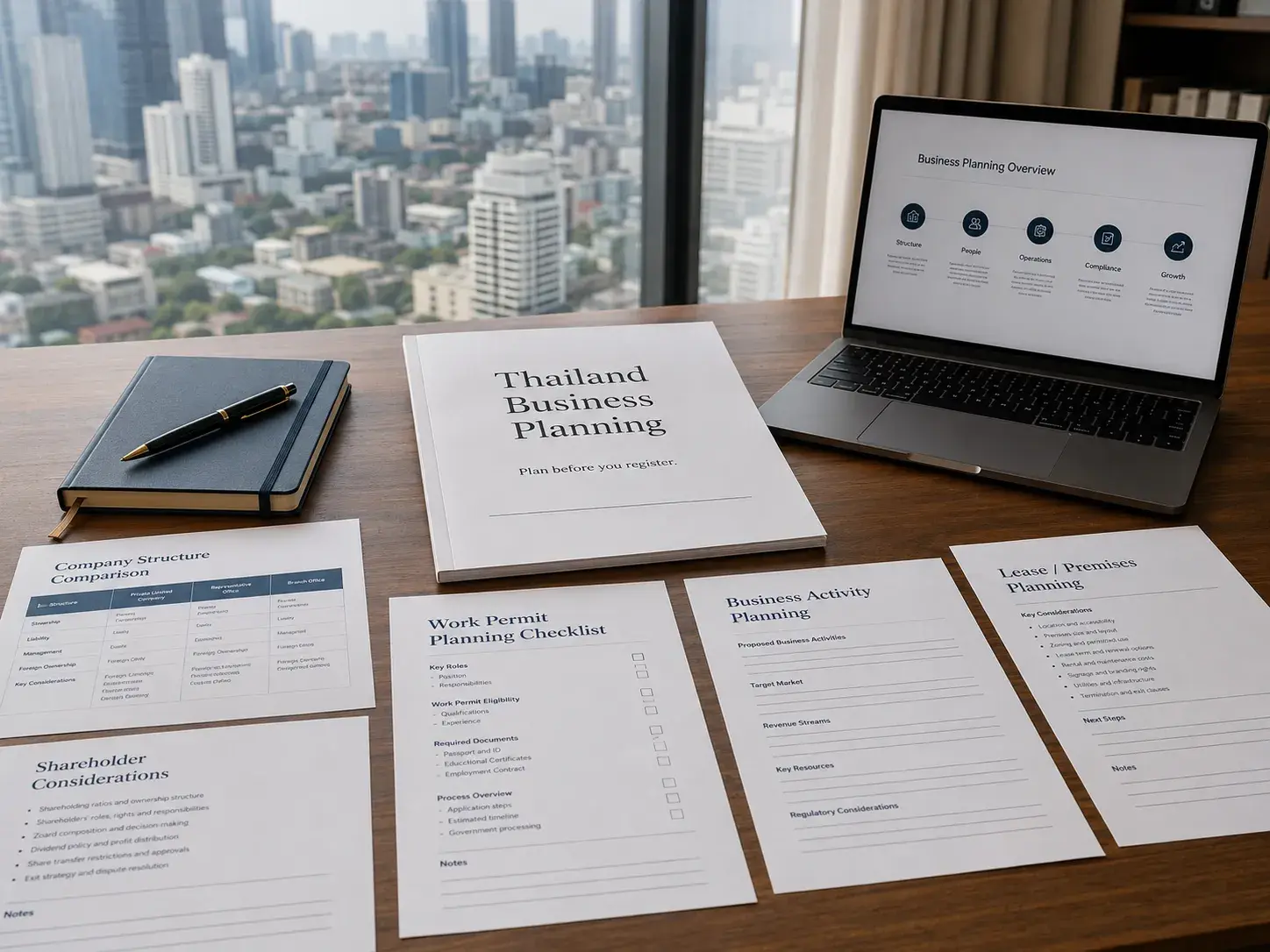
Planning Is Easier When It Starts from the Real Situation
Foreign business owners rarely begin by asking a legal question. They usually begin with a situation. A British couple may want to open a small hospitality business. A foreign consultant may be moving to Bangkok and considering whether a Thai company is the right platform for future work. A restaurant owner may already have a Thai partner, a location in mind, and a lease under discussion.
In each case, the first question is not always which law applies. The first question is what the business owner is trying to build, who will be involved, and what decisions are about to become difficult to change.
This is why case study content can be more useful than another general explanation of company registration. Company formation is visible. It can be researched and compared. The more important issues are often less visible. Who will own the shares? Who will control signing authority and bank arrangements? Will the foreign founder work in the business? Will the business require VAT registration, a physical office, licences, or future work permit planning?
Over the years, we have found that foreign SME owners make better decisions when legal and commercial questions are considered together. A structure that appears practical for one situation may not fit another. A consulting business, a restaurant, a hospitality project, and a trading company may all require different planning discussions even when each begins with the same broad question: Can I open a company in Thailand?
The purpose of these case studies is not to give one answer for every business owner. The purpose is to help readers recognise the decision points that usually deserve attention before documents are signed or money is committed. The same headline question can lead to different practical answers depending on business activity, ownership, Thai-side involvement, work permit expectations, regulatory requirements, and commercial timeline.
This is also where a private law firm discussion becomes different from a filing-only process. Filing generally begins after the structure has already been chosen. A useful legal discussion often takes place earlier, before the client agrees shareholder percentages, signs a lease, pays a deposit, transfers funds, or announces work plans that may be difficult to change later.
Representative Planning Scenarios
The scenarios below are simplified planning examples based on common issues foreign business owners raise when considering Thailand. They are not confidential client stories, testimonials, or legal conclusions for every case.
British Couple Opening a Business in Thailand
A British citizen and Thai spouse want to open a small owner-managed business in Thailand. They may already have a relationship of trust, a general business idea, and some capital ready. The planning discussion should not stop at whether a company can be formed. It should also consider the intended business activity, ownership percentages, director authority, signing powers, family expectations, documentation, tax registration, and whether the foreign spouse expects to work in the business. This type of scenario is often close to implementation, which makes early review valuable before shareholding and control arrangements become fixed.
Foreign Consultant Relocating to Bangkok
A foreign consultant may want a Thai company to support consulting work, invoices, local presence, and future work permit planning. The right discussion depends on the client base, where services are performed, whether Thai or overseas customers are involved, whether the foreigner will actively work in Thailand, and whether the company will need VAT registration or staff. A consultant may assume the company is the main issue, but the practical question is usually whether the structure matches how the services will actually be delivered and documented.
Restaurant Business with Thai Partner
A restaurant project often moves quickly because rent, renovation, staff, suppliers, licences, and branding decisions begin early. A foreign investor with a Thai partner should consider ownership, control, lease obligations, capital contributions, company objectives, director authority, restaurant licensing, tax registration, employment, and work permit planning before committing funds. The relationship may be strong at the beginning, but documentation should still make commercial expectations clear. Restaurant projects can become expensive to adjust once a lease is signed and fit-out costs begin.
Small Hospitality Business with Thai Spouse or Partner
A small hotel, guesthouse, villa management, or hospitality-related project may involve property, operating licences, foreign ownership restrictions, staffing, tax, and long-term control questions. The foreign investor may focus on the property or location first, but the more useful planning conversation often begins with who will operate the business, who will control the company, and what documents support the arrangement. Hospitality projects can involve both legal and operational issues, which makes early structuring particularly important.
Import/Export or Trading Business in Thailand
A foreign SME owner planning an import/export or trading business should consider the product category, licences, customs-related issues, VAT, warehouse or office arrangements, shareholder structure, and authority to sign contracts. The business may look simple at the registration stage, but practical compliance can depend heavily on what is being traded and how the goods move. This type of case study is useful because it shows why business activity should be examined before company documents are prepared.
Foreign Investor Planning for a Work Permit
Some foreign investors assume that a company automatically allows them to work in Thailand. In practice, work permit planning should be considered separately and early. The discussion may involve the company structure, registered capital, Thai staff, physical office, job position, visa status, and timing. If the foreign investor plans to manage the business personally, these issues should be reviewed before company setup, not after commercial commitments have already been made.
What This Means for Foreign SME Owners
If your situation resembles one of these examples, the correct next step is not to copy the structure. The correct next step is to understand which facts make your situation different. The business activity, Thai-side relationship, ownership percentages, director authority, lease, licences, VAT position, and work permit plan may all affect the structure.
For many foreign SME owners, the most useful time to review these issues is before implementation begins. Once documents are signed, funds are committed, premises are leased, or staff are hired, changing direction can become slower, more expensive, and more disruptive.
When to Speak with TILA
- Before agreeing shareholder percentages with a Thai spouse, friend, partner, or investor.
- Before signing a lease, paying a deposit, renovating premises, or buying equipment.
- Before using a Thai shareholder arrangement that you do not fully understand.
- Before choosing who will be director or who can sign on behalf of the company.
- Before assuming that company setup will support a future work permit.
- Before committing funds to a restaurant, hospitality, consulting, trading, or other owner-managed SME business in Thailand.
Image
FAQ Section
Are these real client case studies?
The safer approach is to present them as representative planning scenarios unless written client consent has been obtained for a specific matter. This protects confidentiality and avoids suggesting that one client outcome will apply to another business owner. A restaurant project, consulting company, trading business, or family-owned company may look familiar, but the correct structure can change once the activity, ownership, control, licences, tax position, work permit expectations, and documentation are reviewed.
For website purposes, the wording should make clear that the examples are simplified scenarios based on common planning issues. This is still commercially useful because most foreign SME owners think in situations rather than legal categories. A reader who sees a scenario similar to their own can understand why professional support may be sensible before they sign a lease, agree shareholder percentages, or commit funds.
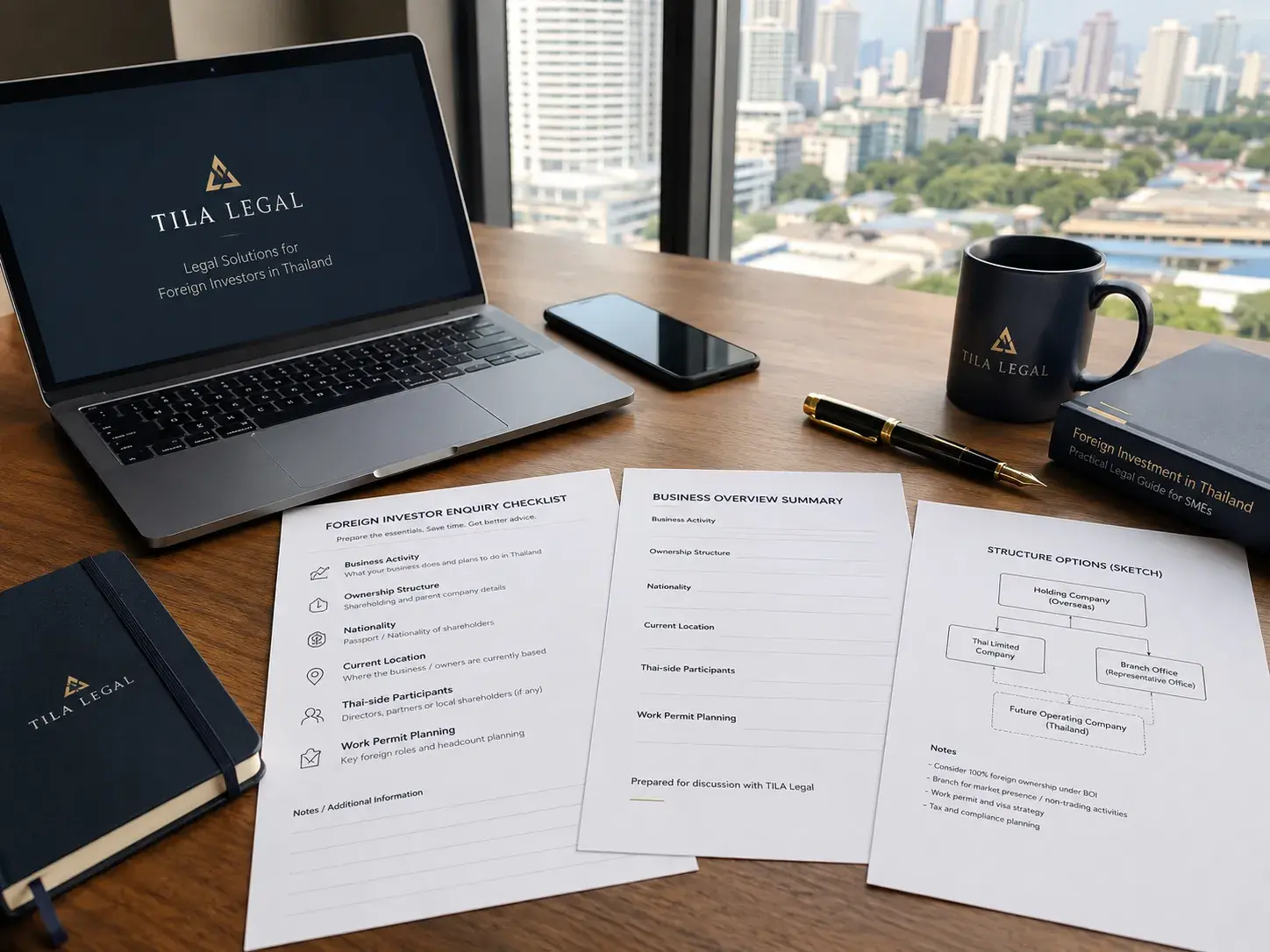
If your proposed business resembles one of these scenarios, please email our legal team with your business activity, ownership plan, nationality, Thai-side participant, and current location. We can review whether an in-person consultation at our Bangkok office is appropriate.
Why are case studies useful for foreign business owners in Thailand?
Case studies are useful because foreign business owners usually do not begin with a legal issue. They begin with a business situation. A British couple opening a small business, a consultant relocating to Bangkok, or a restaurant owner working with a Thai partner may all ask different questions, but the underlying issues often connect ownership, control, documentation, compliance, and work permit planning.
A general page about company setup can explain broad concepts. A case study page helps a reader see how those concepts operate in practice. For example, a foreign investor may assume the key question is whether a Thai company can be formed. In a real business situation, the more important question may be who controls the company, whether the foreigner will work in the business, whether the activity is restricted, whether VAT registration may become relevant, and whether the documents reflect the commercial understanding between the parties.
This is why TILA uses scenario-based planning content within the Foreign Investor Knowledge Center. It helps business owners decide when they should seek professional support before proceeding, without turning the page into a technical legal article.
Can I copy the structure from a case study if it looks similar to my business?
No. A case study should not be used as a template. It may help you identify issues to consider, but it should not be treated as a legal conclusion for your own situation. Small differences can matter. The business activity, nationality, Thai-side participant, funding arrangement, management role, company objectives, shareholder percentages, director authority, lease, licence requirements, VAT position, and work permit expectations may all affect the structure.
This is especially important where a Thai spouse, Thai friend, Thai shareholder, or business partner will be involved. Trust is valuable, but documents and control arrangements should still be understood clearly. A structure that works for a family business may not suit a project with outside investors. A consulting business may raise different concerns from a restaurant or hospitality operation. A company that is acceptable for holding shares may not automatically support the foreign investor's personal work plans.
The better use of a case study is to recognise the questions that need to be asked before implementation. If your facts are close to one of these examples, you should have the structure reviewed before signing documents or committing funds.
What information should I send TILA if my situation is similar to one of these examples?
A useful first enquiry should be practical and factual. Please describe the proposed business activity, the nationality of each foreign investor, whether there is a Thai spouse, Thai friend, Thai partner, or Thai shareholder involved, the intended ownership percentages, who will manage the business, whether the foreign investor expects to work in Thailand, and whether any lease, deposit, supplier agreement, or investment commitment has already been made.
For some matters, it is also helpful to explain whether the business will serve Thai customers, overseas customers, or both, whether the business will have premises, whether Thai staff will be hired, and whether a work permit is part of the plan. If a company has already been formed, the existing company documents and shareholder information may also be relevant.
This information helps our legal team understand whether your enquiry is suitable for our services and whether an in-person consultation at our Bangkok office should be arranged. A concise but complete summary usually leads to a better first response than a general question such as whether a foreigner can open a company in Thailand.
Do case studies replace a consultation?
No. Case studies are designed to help business owners understand the types of decisions that often deserve attention. They do not replace a consultation or a review of the actual documents and facts. This distinction is important because the same business category can produce different legal and commercial answers depending on activity, ownership, control, licences, tax, work permit planning, and implementation timing.
A case study can help you recognise whether your situation is becoming more than a simple company setup. If a Thai shareholder arrangement is involved, if the foreign investor will work in the business, if premises are being leased, if a regulated activity may be involved, or if funds are about to be committed, the facts should be reviewed before action is taken.
TILA LEGAL assists foreign SME owners and investors with company setup, legal structuring, documentation, and compliance in Thailand. If your business plans are moving from idea to implementation, please contact our legal team by email with a short factual summary so we can respond accordingly.
Related Pages
- Foreign Investor Legal Support for Business Setup in Thailand
- Planning Business in Thailand Before Choosing a Structure
- Thailand Business Legal Questions Answered
- Business Planning Guides for Foreign SME Owners
- Nationality Guides for Foreign Citizens Opening a Business in Thailand
- Legal Reference Library for Foreign Business Owners in Thailand
- Do I Need a Thai Shareholder?
- Work Permit Planning Before Starting a Business in Thailand
- Corporate Structure Review for Foreign-Owned Businesses
- Foreign Business Act Review for Foreign Investors


